My review essay about the “Building in China” exhibition recently appeared in the Journal of the Society of Architectural Historians published by the University of California Press in July 2023 (Issue 2, Volume 82). I’d like to thank
Read More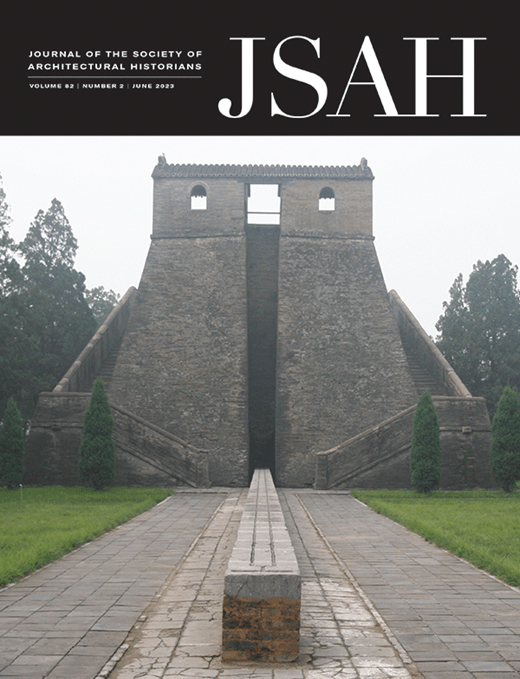
Liyang is an assistant professor at Marywood University. He holds PhD in architecture from the University of Pennsylvania. He works as an architect, editor, translator, teacher, and historian.
My review essay about the “Building in China” exhibition recently appeared in the Journal of the Society of Architectural Historians published by the University of California Press in July 2023 (Issue 2, Volume 82). I’d like to thank
Read More
Seemingly like an account of the modes of spatial experience, Erwin Straus, in fact, tried to explain the temporal experience or the experience of time. Nevertheless, Straus stressed the importance of, with the aim to represent the primary lived experience (erleben) of space, emancipating ourselves from the conceptions of space prevailing in physics and mathematics.…
Read More
Morris’s concern in this book is what he shall call “lived space,” which demands a study of perception in association with the moving body, in other words, needs to put the body at the center. This book shows “how the moving body is inherently open to the world, how the schema and meaning of perception…
Read More
Kockelmans presented a brief re-interpretation of Merleau-Ponty’s thinking on space. He first put the spatial perception between “a true in-self and a pure for-itself.” I understand this approach that denies the position of spatiality as neither an absolute reality nor an abstract notion created by people. Maybe spatiality can be found as the “intermediary model…
Read More
Klein tried to justify the “phenomenological” metaphor in contemporary art, especially modern painting. Klein suggested that the debut of modern art signified the suppression of “reference” (the real or ideal object against which the work used to be measured); it is no longer an expression or imitation because of their nature as “masks.” For Klein,…
Read More
Einstein in his introduction to this book provides a useful note concerning the relationship between architecture and space. He writes, “now as to the concept of space, it seems that this was preceded by the psychologically simpler concept of place. Place is first of all a (small) portion of the earth’s surface identified by a…
Read More
Novotny’s seminal book was trying to delineate the particular effect of Cezanne’s work: “altering the objective appearance of the represented portion of the landscape without making deviations from natural linear perspective”, or the reduction of spatial depth in the representation. In Cezanne’s landscape paintings, we often find a kind of “hesitation in the movement of…
Read More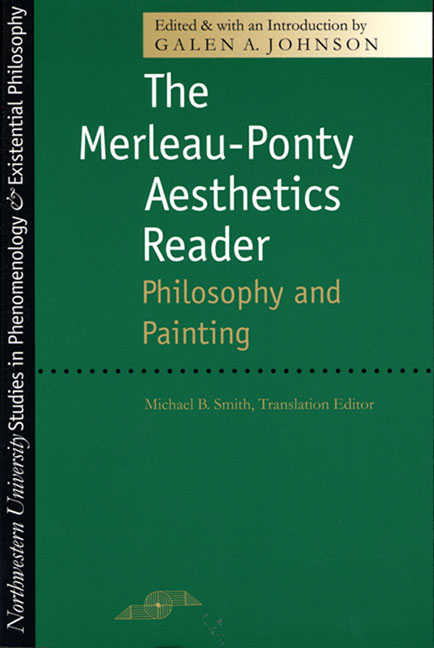
The major reason for singling out Cezanne is a more philosophical one, what Merleau-Ponty took to be the phenomenological work with paint done by this artist. Merleau-Ponty uses the phenomenological language he learned from Husserl to describe Cezanne’s realistic efforts to “paint from nature” but without using the Renaissance techniques of linear perspective and outline.…
Read More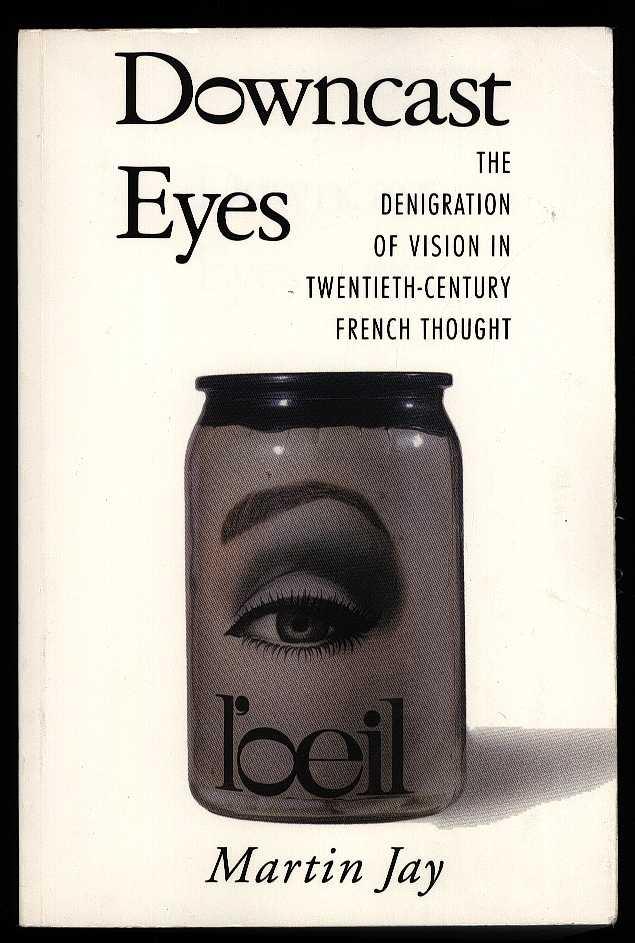
Martin Jay’s Downcast Eyes has a double agenda: (1) to show that vision is by no means the dominant sense in ordering Western culture; and (2) to posit instead a “plurality of ‘scopic regimes, particularly in the climate of postmodernism. Antiocularcentrism provides the unifying thread of Jay’s work, which reviews the theory of vision from…
Read More
Dorner in his book promotes a new kind of dynamic, mutable or expression, whose result was a progressive dissolution of the perspective spatial framework and the objects in it, because it became evident that “the static (immutable) order, whose symbol is constructed three-dimensional space, is too narrow and rigid for an adequate expression of the…
Read More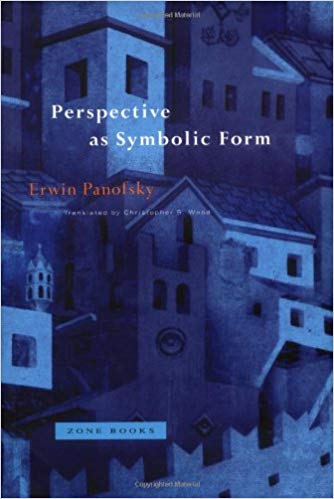
Perspective is a Latin word which means “seeing through.”… “foreshortening,” … into a “window,” and when we are meant to believe we are looking through this window into a space Panofsky explains that the aim of perspective is to “guarantee a fully rational – that is, infinite, unchanging and homogeneous – space, this “central perspective”…
Read More
The book deals with questions of art history as well as the science of various levels on the basis of conceptual critique (Badt sees them as connected). The premise of Badt’s discourse is that “space is not an immediate object of artistic representation” but rather an “effect” as spatial effects are not immediate in the…
Read More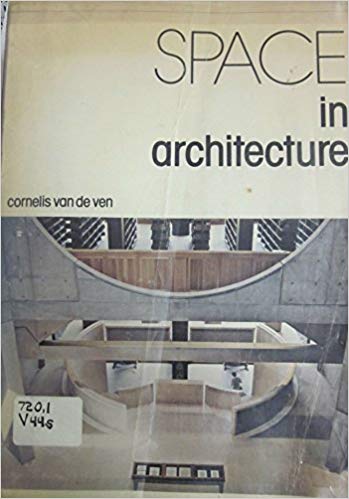
Thank for van de ven’s contribution to the study of space in architecture. From my point of view, this is an absolutely unparalleled work. The rise of the notion of architectural space started since the late 19th century and, especially in German architectural circle, got developed into a very mature status until 1930. In association…
Read More
In this essay Schwarzer investigated the intellectual background of August Schmarsow’s writings on architecture, to describe the salient features of his theory of Raumgestaltung, or spatial forming, and evaluate its influence on subsequent thinking on architecture and space. State briefly, Schmarsow was the first to formulate a comprehensive theory of architecture as a spatial creation…
Read More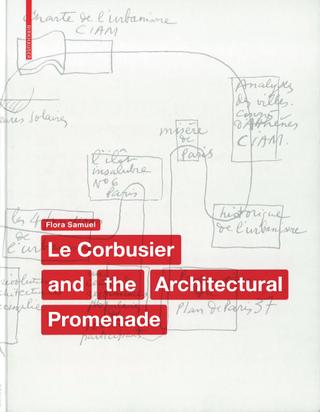
Samuel’s book argues that “promenade” was a term favored by the filmmaker Sergei Eisenstein, much admired by that Le Corbusier, whose theory of montage played a significant role in the history of the modern film industry. Since Corbusier has stated that “architecture and film are the only two arts of our time,” this work can…
Read More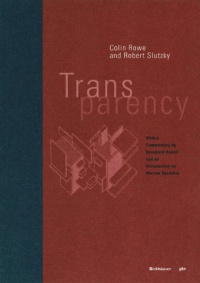
Colin Rowe and Robert Slutsky’s transparency has obvious implications for the development of the promenade as it is the interpretation of its different stages that gives it its particular impetus. Rowe and Slutsky make their well-known distinction between “literal” transparency, for example, the ability of a window to allow people to see through it, and…
Read More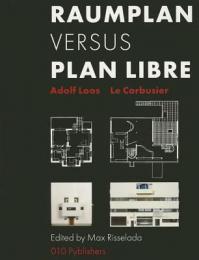
One of the very few books devoted to the discussion of these two spatial ideas that developed by Loos and Le Corbusier around the similar historical period. Loos’s Raumplan obviously received much more attention. Speaking of the commonalities or differences between these two ideas, Loos’s treatment to the openings, which was perceptively observed by Colomina,…
Read More
Reichlin in his essay discussed the decisive contribution of “axonometric” drawing to architectural representation. With the manifestation of actual projects and architectural presentations by Eisenman, Gropius, Hejduk, Lissitzky, and Hilberseimer, Reichlin argued that “the complex relationship and the divorce that had come to exist between the architectural product in its perceptible and consumable reality on…
Read More
Oechslin first repeated Loos’s famous self-explanation of his space-making intent, with an emphasis on the last note – “setting free a ground plane in space.” He interprets Loos’s contribution is nothing more than “spatial plan,” showcasing both strong impact from the “English house” from the late 19th century and the attempt to introduce Semper and…
Read More
McCarter’s book embraces, rather than the “distancing form of a building, placing it in front of us as an object for aesthetic speculation,” the primacy of interior space in modern architecture that provides us “the feeling of embodied, haptic intimacy” of our experience. The “woven plan” of F. L. Wright, Raumplan (room plan) of Loos,…
Read More
Long in this book suggested a different reading of Loos, Frank, and Strnad’s spatial programs, (examining how they assembled rooms within a volume and the complex ways in which they connected these spaces.) “one that does not entirely replace the old one, but seeks to offer a significant amendment: that a core part of the…
Read More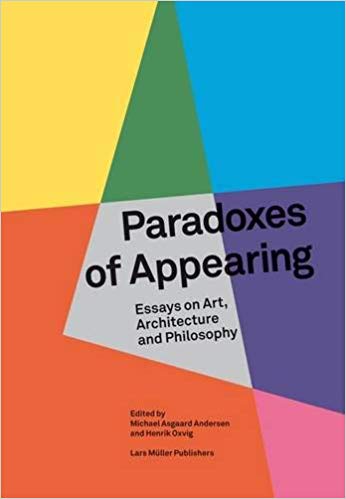
This essay was intended to answer this following question: “were there architects who chose an architecture that acknowledged the primacy of living experience over one that put painterly images on display?” David argued that there was a distinction between the image and the “appearance” of an architectural work, that the first requires but intensifies the…
Read More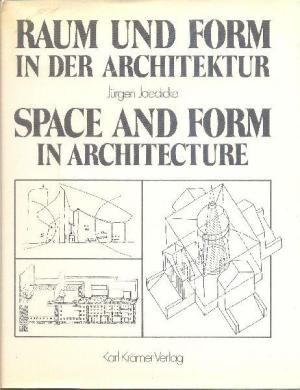
Joedicke, in his book, distinguished two kinds of spatial treatments (configuration): spatial container, space as an enclosed continuum (Goethe’s garden house), and spatial field, space as a field between volume (Mies’s Pavilion) The spatial field is dependent on the perceptive, rather than measurable, relationship between the observer and, instead of a single object, a group…
Read More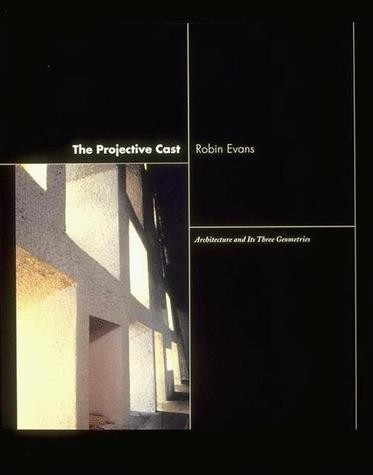
I read this book 10 years ago for a required reading of Homa Farjadi’s studio. Homa informed us of Robin Evans’s unexpected death in 1993, at the age of 48. This book was published posthumously. Rather than a survey book of the use of geometry in architecture, Evan’s book offers a series of critical essays…
Read More
In addition to what I have stated when annotating the Colomina’s essay in the book Raumplan versus Plan Libre, Beatriz Colomina offered a perceptive reading, one that begins to suggest the multifarious nature of the space alongside the pool. In every Loos house, she writes, “there is a point of maximum tension, and it always…
Read More
Bragdon tried to explain the potential method to visualize the “four dimensional” forms, even though they are “invisible to sight.” Despite its remote connection to architecture, there are a few inspiring points of this text. (1) the reason for we have difficulty in accepting the reality that is not contained in our experience is that…
Read More
Tegethoff in his essay discusses several characteristics of the conception of Miesian space. (1) the composition of walls (segments) defies the system of enclosure in terms of separating areas, thus resulting in a constant flux rather than usual division. For Mies, glass in Mies’s projects, such as the brick country house, is used as substance…
Read More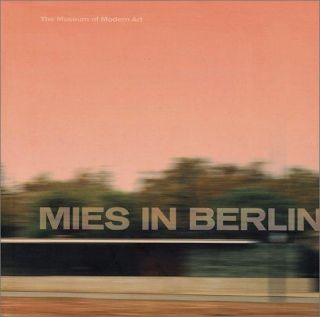
Bergdoll’s seminal writing on Mies and his spatial construct argue that Mies developed the architektonischer Garten idea into a specific model of spatial configuration (Bergdoll 2001, 66-105), as he sought a sense of freedom in spatial composition not only for interior but also between interior and exterior. Specifically, Mies’s pre-World War I work, such as…
Read More
Posener’s authoritative study of Poelzig follows the course of the architect’s work through the various phases of his professional career, the moves he made first to Breslau, then to Dresden, finally to Berlin and his uninterrupted work as a professor. I think this source is helpful for me to understand the dawn of the Neues…
Read More
This work tries to go beyond the two major tendencies to view building: (1) as objects that result from design and construction techniques (2) as objects that represent various practices and ideas. Leatherbarrow advocates to overcome (suspend) both technological and aesthetic styles of thinking, because both reduce architecture to our concepts and experiences of it.…
Read More
Werner Oechslin attempted to reconcile Mies’s cryptic and contradictory writings made while still in Germany. Vivian Endicott Barnett contributed an essay about Mies’s own art collection, and Cammie McAtee related new information about Mies’s first, tentative visit to America. Phyllis Lambert, the volume’s editor, provided a multichaptered “book-within-a-book” spanning Mies’s American phase. Detlef Mertins, the…
Read More
Review for Jürgen Joedicke’s “The Ramp as Architectonic Promenade in Le Corbusier’s Work,” published in Daidalos 12 (1983), page 104-8.
Read More
Review for Eckehard Janofske’s Architektur-Räume: Idee und Gestalt bei Hans Scharoun published by Braunschweig in 1984.
Read More
Review for Mari Hvattum’s Gottfried Semper and the Problem of Historicism published in 2004 by the Cambridge University Press. This book is as important as Harry Mallgrave’s biography with regard of interpreting Semper. Mari’s book, on the other hand, presents a systematic philosophical analysis of Semper’s lifelong ambition to formulate a global history of architecture as…
Read More
Review for Wolfgang Herrmann’s Gottfried Semper: In Search of Architecture, published by the MIT Press, 1989. Semper’s and Schmarsow’s theories in architecture were initially intended to construct the foundation for the modern understanding of architectural space and spatiality. This book contains the transcript of Semper’s writing “The Attributes of Formal Beauty,” one of the most important…
Read MoreIn this paper, Robin Evans reflected on the asymmetrical characteristic of Mies’s Barcelona Pavilion. The first asymmetry came from the Pavilion in situ as it “indicates that it is related to its context by being at odds with it.” The second one, associated with the reflective or mirror symmetry, can be identified in almost every…
Read MoreConstant put Mies’s Barcelona Pavilion into the “framework of picturesque garden tradition.” She believes that Mies was in debt to the picturesque in this work, which provides a means to transcend the difficulty of the work. The main argument of this paper, though, in this work Mies revealed the possibility to transcend the decorative and…
Read MoreReichlin’s essay tells the story about the disagreement between Auguste Perret and Le Corbusier with regard to some of these modernists formal treatments, reflecting their contrasting opinions between the “new, extraordinary” generation and the”previous traditions.” Among the “faults” these architects made, the form of the openings on the wall surface was the most serious and…
Read MoreBrooks demonstrated how Wright dissolved the corner between the rooms to permit one room to penetrate into the other. The concept behind the destruction of box can be found in a wide range of Wright’s designs (not only buildings but also furniture and interiors) In Wright’s houses, the plans were made of walls in non-traditional…
Read More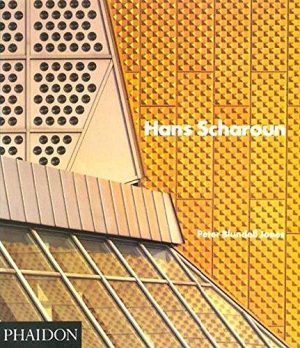
Review for Peter Blundell Jones’s Hans Scharoun, originally published by Phaidon in 2004. Peter Blundell Jone wrote his first monograph on Scharoun at a fairly young age. Presented as so far the best monograph of Scharoun, Blundell Jone combed through Scharoun’s life and career in detail, revolved around a number of major concerns of Scharoun,…
Read More
Review for Otto Wagner’s Modern Architecture: A Guidebook for His Students to This Field of Art (originally published in 1896), translated by Harry Mallgrave by Getty Center Publication in 1996. Even though missing the notion of “space,” this book is important mainly because Wagner’s thinking and buildings reflected a goal analogous to Hermann Muthesius. According to Stanford…
Read More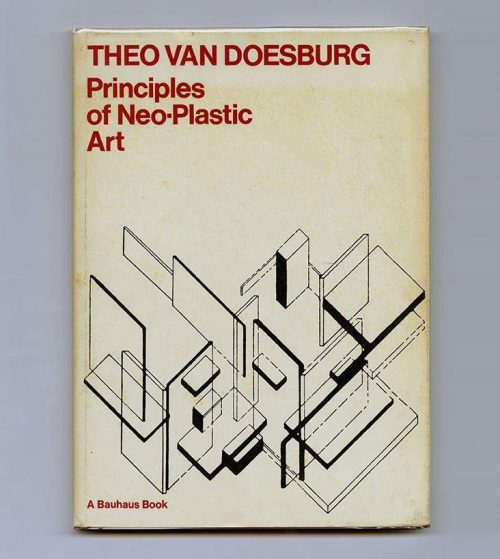
Review for Theo Van Doesburg’s Principles of Neo-Plastic Art (originally published in 1925). By “plastic,” Doesburg means an art form derived from a universal stylistic intent. The artist gave reality a new shape in a framework of deeper and “elementary space. He also says that the available limited vocabulary for this art is “plastic”, composed…
Read More
Review for Gottfried Semper’s The Four Elements of Architecture and Other Writings, translated by Harry Mallgrave, and published by Cambridge University Press in 2010. It was with Gottfried Semper that the notion of space first found its way into German architectural discussion. Drawing upon ethnological investigations of the 1840s, Semper began toward the end of…
Read More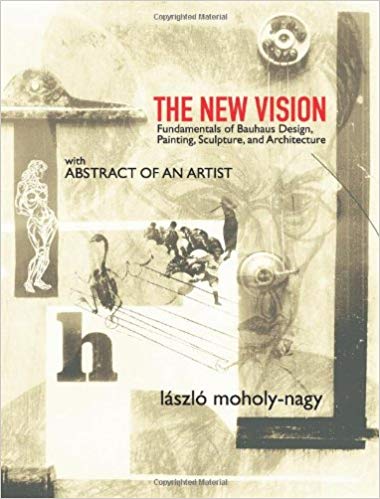
Review for László Moholy-Nagy’s The New Vision: Fundamentals of Bauhaus Design, Painting, Sculpture, and Architecture (originally published in 1928) Moholy-Nagy in The New Vision, to illustrate the problem, listed forty-four adjectives describing different kinds of space. He managed a remarkably sophisticated synthesis of them, and above all, he turned what had previously been a matter…
Read More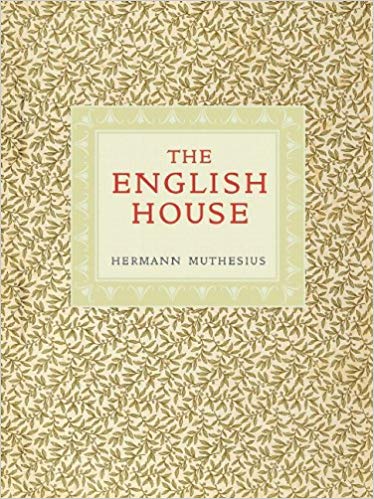
Review for Hermann Muthesius’s The English House (originally published in 1904-5), translated by Stewart Spencer (2007). This 3-volume book is the first full translation of Muthesius survey of English country house in the 1890s. The early version of this book published in 1987 intentionally omitted the first volume, which is mainly a historical review of…
Read More
Review for Hermann Muthesius’s Style-Architecture and Building-Art: Transformations of Architecture in the Nineteenth Century and Its Present Condition (originally published in 1902) translated by Stanford Anderson. Proceeding his magisterial three-volume study of the English house (1904), this book reflected Muthesius’s denial that contemporary artistic production stemmed from either the continual adoption of past styles or…
Read More
Review for Piet Mondrian’s Plastic Art and Pure Plastic Art, 1937, and Other Essays, 1941-1943. Mondrian believes in an objective and universal expression. The “pure reality” that he was after cannot be found in subjective expression, because the subjective feeling, evoked by particular forms and natural color, obscures “pure reality.” Even though the appearance of natural…
Read MoreMendelsohn considered architecture from a unified perspective of plan, section, and elevation as three main graphic devices. He sees the structural system of the “new era” is based upon “elastic continuity,” whereas the ancient systems of post and beam and the medieval system of buttress and vault were “gravity structures” – unelastic and intermittent constructions.…
Read MoreThe main concern of Gropius is to unify art and industry: artist should not remain a mere decorator, but concern himself with the spatial organization of modern industrial problems. His take is to arrive at the most economical use of space and time. He maintains that the purpose of architecture is the creation of space…
Read MoreThe influence of Ebeling on Mies has recently stressed by Fritz Neumeyer. (the artless words,171-77) Ebeling saw space as a membrane, a protective covering, like the bark of the tree, between man and the outer world. It was thus directly formed by man’s activity and equalized his relationship with the external world. Space,formed by the…
Read More LIYANG DING